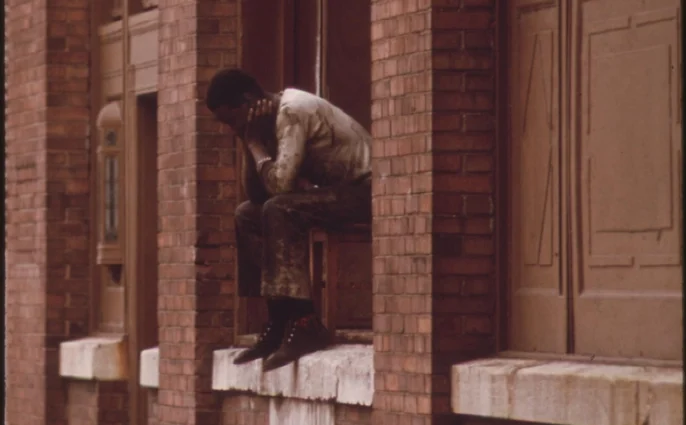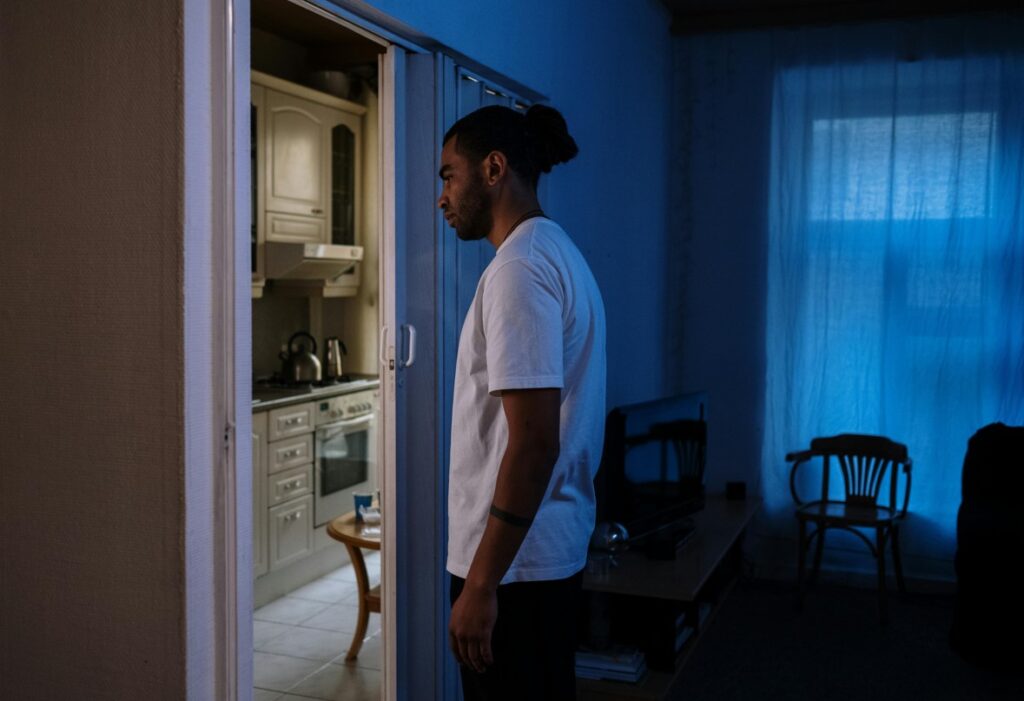
For the first few weeks after I found out, my emotions ran me.
That’s the only honest way to describe it. I wasn’t experiencing emotions, they were happening to me, through me, without much input from the part of me that could think clearly. Rage that arrived without warning in the middle of conversations about nothing. Grief that showed up during the drive to work and made the last ten minutes unnavigable. A flat, heavy numbness that settled in afterward like weather and refused to shift.
I wasn’t in control. And the loss of control was almost as disturbing as the betrayal itself because I was a man who had always believed, quietly and without really examining the belief, that I had a handle on myself. That whatever happened, I could manage my interior life. Betrayal dismantled that belief completely.
What I eventually learned, slowly, through observation rather than any formal process, was not how to stop feeling. It was how to stop being commanded by what I felt.
That distinction sounds small. It isn’t.
I didn’t learn to feel less. I learned to feel without being moved by every feeling as though it were an order.
The Problem With Emotional Flooding
When you’re in the middle of it, when the betrayal is recent, and the wound is open and every day brings some new piece of evidence or some fresh reminder, your emotional system is in a state of constant activation. Psychologists call it flooding. The emotional input is coming faster than your brain can process it, so it bypasses the parts of you that reason and goes straight to the parts that react.
You say things you regret. You make decisions from the worst possible vantage point. You oscillate between states, furious, then numb, then bargaining, then furious again, without understanding what’s driving the oscillation or how to slow it down.
The flooding doesn’t mean you’re weak. It means you’re human and something genuinely terrible happened to you. But it does mean that you are, in those periods, an unreliable narrator of your own experience. What you feel in a flooded state is real, but it is not the full truth. It’s one frequency, amplified.
The work, and it is work, is learning to hear the other frequencies too.
A flooded man is not a broken man. He’s a man receiving more input than he can process. The goal is not to feel less. The goal is to process faster.
The Shift: From Commands to Data
The reframe that changed everything for me came from an unlikely place. I was reading something, I don’t remember what, something unrelated to all of this, and I came across the idea that emotions are information, not instructions.
That landed differently than it might have at another time in my life.
An instruction is something you obey. When anger arrives as an instruction, you act on it, you say the sharp thing, you make the aggressive move, you do the thing that releases the pressure in the moment and costs you later. When grief arrives as an instruction, you collapse into it, you cancel the day, you disappear, you let it run the schedule.
Data is different. Data is something you observe, record, and interpret before you act on it. Data tells you something about your state without demanding an immediate response. Data can be noted and set aside while you decide what, if anything, to do with it.
I started applying this to my own emotional experience. When I felt something strongly, rage, grief, the particular sick feeling that came with certain memories, I tried to treat it as information rather than a command. Not to suppress it. Just to notice it, name it, and ask what it was telling me before I let it determine my behaviour.
It felt artificial at first. Forced. Like I was performing a kind of detachment I didn’t actually feel. But over the weeks, it started becoming natural. And what I found on the other side of it was not numbness, not the flat, hollow absence I had feared emotional control would produce. It was something closer to clarity. A quieter kind of presence.
The anger was still there. The grief was still there. But I was standing slightly behind them now, watching, rather than being carried along inside them.
What This Looked Like in Practice
Concretely, because abstract frameworks are easy and implementation is where things actually change, here is what this looked like day to day.
When a feeling arrived, I started naming it precisely. Not just ‘I’m angry’, that’s too broad to be useful. Angry about what, specifically? The betrayal itself? The deception? The particular memory that just surfaced? The specific injury matters because different injuries require different responses. Lumping everything under ‘anger’ makes it impossible to address anything specifically.
I started tracking patterns. When did the worst flooding happen? Mornings, before the day distracted me. Late at night, when the house was quiet. Certain days of the week when something about the schedule or the routine triggered memory. Once I could see the pattern, I could prepare for it, not to avoid the feeling, but to meet it from a slightly more stable position rather than being ambushed by it.
I started building a small gap between stimulus and response. A pause. Long enough to ask: what is this feeling telling me? Is this the moment to act, or the moment to wait? Often the answer was wait. Not forever. Not in avoidance. Just long enough for the flooding to subside and the clearer part of me to weigh in.
That gap, that pause, is where freedom lives. A man who can create even a few seconds of space between what he feels and what he does is a fundamentally different man from one who cannot.
Between stimulus and response there is a space. I spent months learning to widen that space. Everything that changed for me happened inside it.
What Emotional Detachment Actually Means
I want to be precise about this because the phrase ’emotional detachment’ gets used in ways that are misleading and sometimes damaging.
Detachment does not mean disconnection. It does not mean suppressing what you feel, pretending the pain isn’t real, building a wall between yourself and your own experience. Men who do that don’t heal. They carry the unprocessed weight of everything they refused to feel, and it shows up later in ways that are harder to address than the original wound.
What I mean by detachment is something more like perspective. The ability to feel fully and still maintain a slight observational distance, to be both inside the experience and watching it simultaneously. Not to escape the pain. To be present with it without being consumed by it.
It sounds paradoxical. In practice it feels like the difference between being underwater and floating on the surface. You are still in the water. You can still feel the cold, the weight, the pressure. But you can breathe. And from the surface, you can see where you are.
The practice I’m describing here is easier when you have a private place to track it consistently — [Silent Resilience is built around exactly this kind of structured emotional processing] → silent-resilience.com/begin
The Longer Work
This is not something that happens in a week. I want to be honest about that because the framing of ‘reframe your emotions’ can make it sound like a switch you flip, a mindset shift that rearranges everything immediately.
It took months. Months of noticing the flooding, applying the pause, naming things precisely, tracking patterns. Months of getting it wrong, reacting from flooding, saying things I wished I’d held back, collapsing into grief when I’d intended to observe it, and then returning to the practice rather than abandoning it.
What changed was not that the emotions stopped. What changed was my relationship to them. They became less surprising. Less destabilizing. Less capable of making decisions for me without my consent.
I started to trust myself again in a way I hadn’t since the night I found out. Not because the situation had resolved, it hadn’t, not then. I had demonstrated to myself, repeatedly and concretely, that I could feel hard things and not be destroyed by them. That I could be moved without being swept away.
That trust, in your own capacity to survive your own interior life, is one of the things betrayal takes first. Rebuilding it, one small demonstration at a time, is some of the most important work a man in this situation can do.
You don’t rebuild self-trust through declarations. You rebuild it through small, repeated demonstrations that you can be relied upon, by yourself, for yourself.
Last week I wrote about what it’s like to live inside the same house after betrayal, the specific exhaustion of that, and what it quietly builds in you. Next week: to the man who stayed, and still wonders every day whether he should have.